At WISH, wound care is more than treating a wound — it’s a complete care plan that addresses the whole patient, not just the hole.
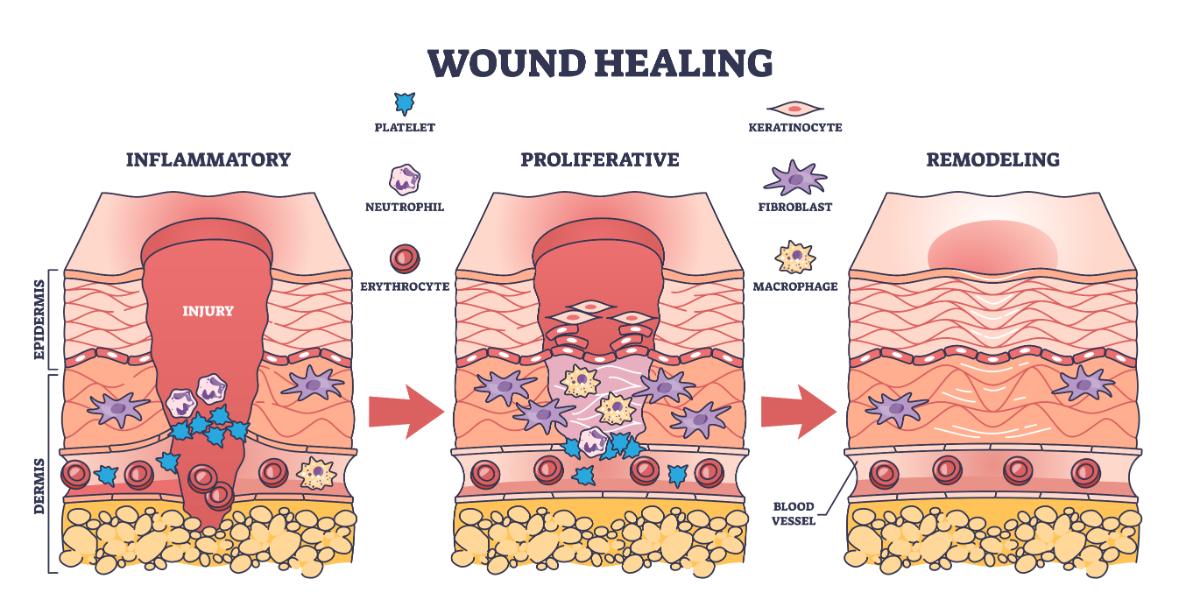
Four phases of healing
Every wound moves through a predictable biological sequence. Understanding each phase helps our team intervene at the right moment with the right therapy.
Phase 01
Hemostasis
Immediate response to injury — stopping bleeding and stabilizing the wound using advanced dressings and techniques.
Phase 02
Inflammation
Immune response activates to prevent infection. WISH closely monitors for signs of delayed healing, common in chronic wounds.
Phase 03
Proliferation
New tissue and blood vessels form. NPWT and ultrasonication accelerate regeneration and promote efficient wound closure.
Phase 04
Remodeling
New tissue matures and strengthens. Focus shifts to preventing contracture and reducing the risk of reinjury.
Advanced healing strategies
Chronic wounds rarely respond to a single approach. WISH combines evidence-based therapies tailored to each participant’s wound type, severity, and underlying health conditions.
Compression therapy
Essential for venous leg ulcers — promotes venous return, reduces edema, and facilitates faster wound healing.
Moist wound management
Specialized dressings maintain ideal moisture balance to support tissue repair and prevent desiccation.
Negative pressure wound therapy
NPWT applies controlled suction to chronic wounds, accelerating healing and reducing infection risk.
Interdisciplinary team model
Each member of the IDT collaborates across all care phases — from initial injury through full recovery — ensuring every participant’s underlying conditions are addressed alongside their wound.
Wound care nursesPrimary wound assessment, dressing changes, and monitoring
Rehabilitation therapistsMobility, strength, and functional recovery support
PodiatristsDiabetic foot care, offloading, and lower-limb assessment
DietitiansNutritional support to optimize tissue repair and immunity
PhysiciansMedical oversight and management of underlying conditions
Social workersCare coordination, caregiver support, and resource navigation
The future of wound healing
For those most vulnerable, innovation and collaboration are not aspirations — they are obligations.
As we continue to refine our approach to wound care, we remain committed to advancing the field through innovation and collaboration. The IDT model offers a glimpse into the future of wound management, where holistic care and advanced therapies work in tandem to heal wounds and improve the quality of life for our participants.
The wound healing process at WISH is more than just treating wounds — it is about providing a complete care plan that addresses the whole patient, not just the hole. By focusing on the phases of wound healing and utilizing advanced therapies, we are setting new standards in wound care that could serve as a model for the broader healthcare community.